




Which repairs need to happen today? Which ones can wait a month? Which ones are optional?
If you can’t answer that in 30 seconds, the report isn’t doing its job.
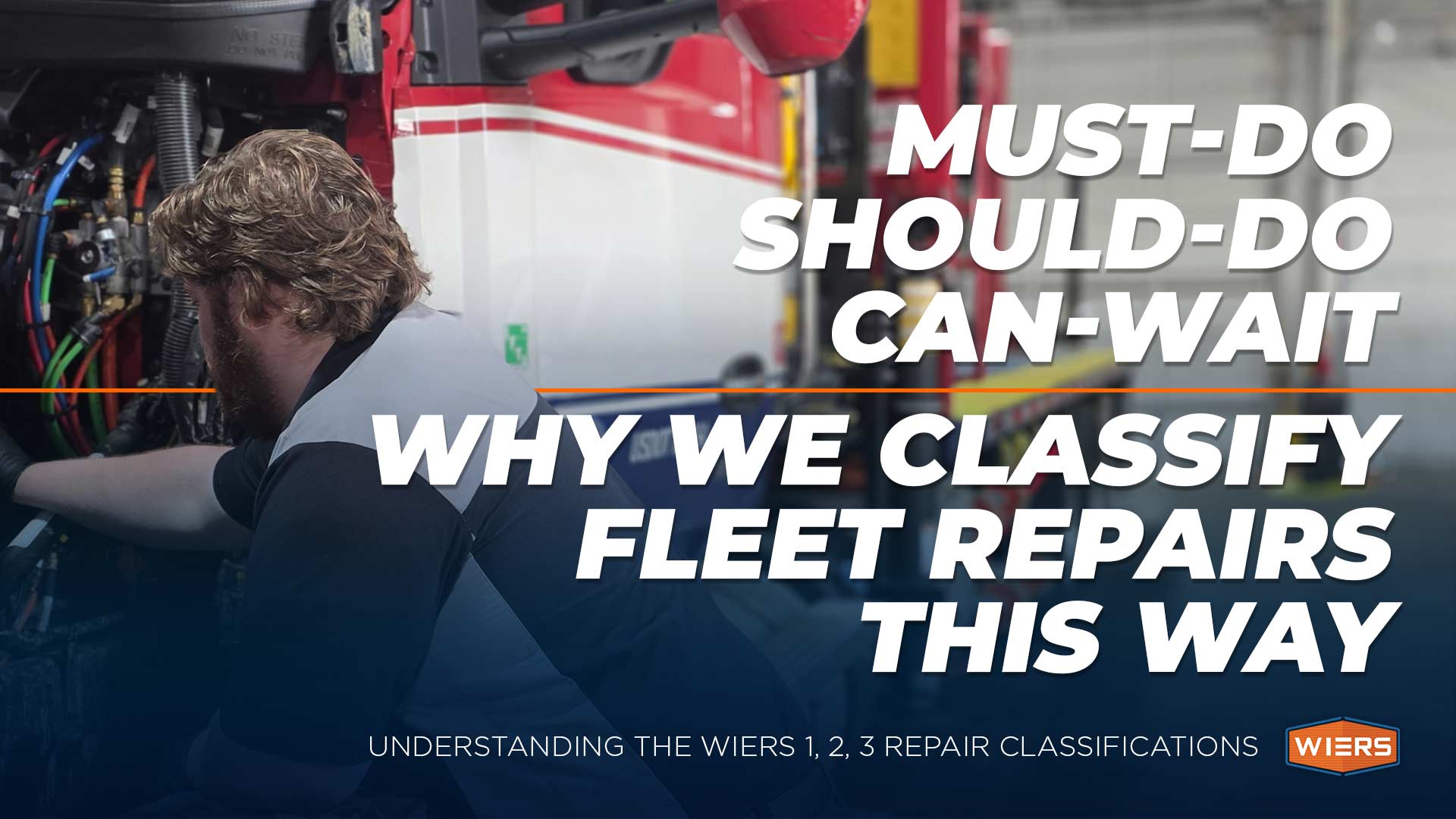
To manage compliance, cost, and downtime all at the same time, you need to know what repair comes first. That’s why every finding on a Wiers inspection report gets one of three ratings: Class 1, Class 2, or Class 3.
We rank findings so you don’t have to guess
A list with no ranking puts the prioritizing on you. So you make a call.
- Approve everything, and you spend money on items that could have waited.
- Approve nothing, and a small problem becomes a big one.
- Approve safety items only, and put the unit at risk of going down.
Now multiply that by every unit and every location you manage.
When was the last time you approved a repair without knowing if it could have waited?
Class 1, 2, and 3: how we rate every fleet maintenance inspection finding
After every maintenance visit, your technician files an electronic inspection report. Each finding gets a class. Here’s how to read it.
| CLASS | IN PLAIN TERMS | WHAT IT MEANS | WHAT YOU DO | EXAMPLES |
|---|---|---|---|---|
| Class 3: Repair Now | Must-do | Immediate safety hazard, current DOT/FMCSA violation, or a condition that could cause vehicle failure | Fix it before the unit goes back out. Your technician tells you before leaving your lot. Your Wiers team sends an estimate and asks how you want to proceed. | Brakes below DOT minimum, active fuel leak, brake lights out, cracked frame member, missing required safety equipment |
| Class 2: Schedule Repair | Should-do | Outside recommended service parameters or getting worse. Not a safety risk today. | Authorize and schedule it with your Wiers team before the next service interval | Brake lining near minimum spec, tire tread near minimum spec, worn belts |
| Class 1: Optional Repair | Can wait | Fine for now, but showing early wear or nearing end of service life | Nothing today. It’s documented, and your Wiers team checks it again at future visits. | Torn seat, surface rust, cosmetic damage |
One rule holds across all three. Nothing gets fixed without your approval. You make the call. The rating tells you how fast you need to make it.
We flag Class 2 because that’s where you save money
Class 3 gets the attention. Class 2 is where you have the most control.
Class 2 items that sit too long tend to become Class 3. Brake lining near minimum spec today can be brakes below DOT minimum a few months from now. Tires and belts follow the same path.
Waiting doesn’t make the repair go away. It changes who picks the timing.
- At Class 2, you pick the day. You work the repair around your routes.
- At Class 3, the truck picks the day. The unit sits until it’s fixed.
Cheap maintenance shows up as expensive repairs. Find it early, fix it early. Class 2 is the “early.”
We track Class 1 so nothing surprises you
Class 1 doesn’t mean “forget about it.” It means “not yet.”
- Every Class 1 item goes on the report.
- Your Wiers team checks it again at future visits.
- When it moves to Class 2, you already saw it coming.
That history helps you plan for budget and replacement planning time.
What this changes for you
A rating system sounds simple. The value is in using it the same way, every visit, on every unit.
- Faster approvals. You know which estimates need an answer today and which can wait for your weekly review.
- Fewer surprises. Worn parts get flagged visit by visit. A big repair isn’t news when it finally comes due.
- Clear compliance picture. Class 3 includes current DOT/FMCSA violations. You know where each unit stands before a roadside inspection does.
- Same language for everyone. “Unit 14 has two Class 3 items” means the same thing to you, your drivers, and your boss.
- A safety lens on every decision. You approve repairs every week. The rating keeps safety at the front of each one.
Here’s a question worth asking about any inspection report you get today. Can you tell the must-do from the can-wait at a glance?
See it on your own fleet
Want to know how your units would rate today?
- Book a 15-minute fleet review. No commitment. We’ll walk through what a Wiers inspection report would show for your fleet.
- Questions? Email help@wiers.com.
Frequently asked questions
What’s the difference between a Class 2 and a Class 3 repair? Class 3 is a safety hazard, a current DOT/FMCSA violation, or a likely vehicle failure. Fix it before the unit goes back out. Class 2 isn’t a safety risk today, but it needs repair before the next service interval.
Do I have to fix Class 1 items? No. Class 1 items are fine for now. They’re documented and checked again at future visits so you can plan ahead.
Will Wiers fix a Class 3 item without asking me? No. Your technician tells you before leaving your location. Your Wiers team sends an estimate and confirms how you want to proceed.
What happens if I don’t fix a Class 2 item? It tends to get worse. Many Class 2 items become Class 3 over time, and then the repair can’t wait.
How do I get my inspection report? Your technician submits an electronic inspection report after every maintenance visit. Every finding on it carries a Class 1, 2, or 3 rating.